
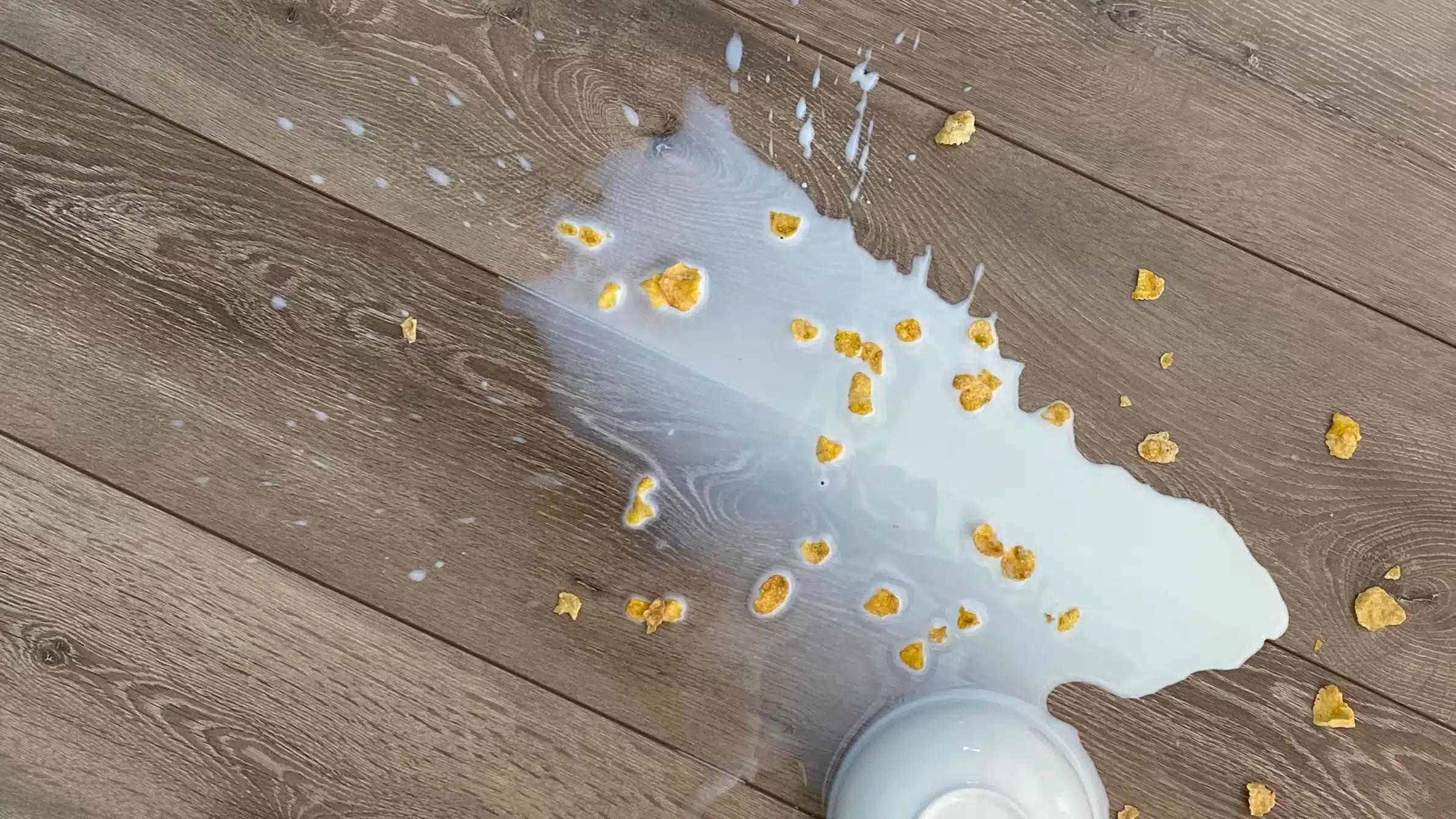
When tackling moisture-prone areas like basements, bathrooms, and kitchens, your choice of flooring isn’t just about aesthetics—it’s about protecting your home’s structural integrity. Whether you are dealing with humidity, accidental spills, or the specific challenges of a below-grade concrete slab, selecting the right material is essential for long-term durability.

Luxury Vinyl Plank (LVP)
- Performance: LVP is 100% synthetic, meaning it will not absorb water, swell, or rot.
- Comfort: Compared to tile or concrete, LVP feels warmer and softer underfoot, making it ideal for living spaces and basements.
- Installation: It is highly versatile and can often be installed directly over existing concrete subfloors, provided they are level and moisture-tested. Floating click-lock systems are particularly popular as they allow for slight movement and are very DIY-friendly.
- Best For: Busy families with pets or high-traffic areas where comfort and waterproof reliability are both priorities.
Porcelain and Ceramic Tile
- Performance: Porcelain, in particular, is extremely dense and virtually impervious to water, making it a top-tier choice for bathrooms or areas prone to actual flooding.
- Durability: It is nearly indestructible under normal household use and does not show wear easily.
- Maintenance: While the tile itself is waterproof, you must ensure your grout is properly sealed to prevent moisture from seeping into the subfloor.
- Best For: Bathrooms, laundry rooms, and entryways where moisture is constant or frequent.
Sealed Concrete
- Performance: Concrete is porous by nature, but once professionally sealed, it becomes a powerful barrier against moisture absorption, reducing water penetration by as much as 77.6%.
- Durability: It is effectively the king of durability, standing up to heavy equipment, chemicals, and high-impact traffic.
- Versatility: Beyond its utilitarian roots, concrete can be stained, polished, or textured to create a high-end, custom look that fits various interior design styles.
- Maintenance: While the material itself is permanent, the sealant will typically need a refresh every 2–5 years to maintain its water repellency and luster.
- Best For: Basements, workshops, and storage areas where you need a “set-it-and-forget-it” surface.
Comparison at a Glance
| Feature | LVP | Tile | Sealed Concrete |
|---|---|---|---|
| Waterproof Level | Excellent | Excellent | Excellent (when sealed) |
| Comfort | Warm/Soft | Hard/Cold | Very Hard/Cold |
| Best Room | Basements/Living | Bathrooms | Workshops/Storage |
Final Recommendation: Prep is Everything
 Regardless of whether you choose LVP, tile, or concrete, the success of your project depends on subfloor preparation. If you are installing over a concrete slab, always conduct a moisture test first. A vapor barrier or moisture mitigation product is often a wise investment, even when using waterproof flooring, to prevent trapped moisture from causing long-term issues.
Knowing your options when planning for your next big remodel project is crucial. At Tile Liquidators, we’ve been serving North Alabama for over 30 years, and we know that the best flooring decisions are made when you have the right information in hand. Our showrooms are more than just retail spaces; they are design centers where you can explore, compare, and feel confident in your final selection!