
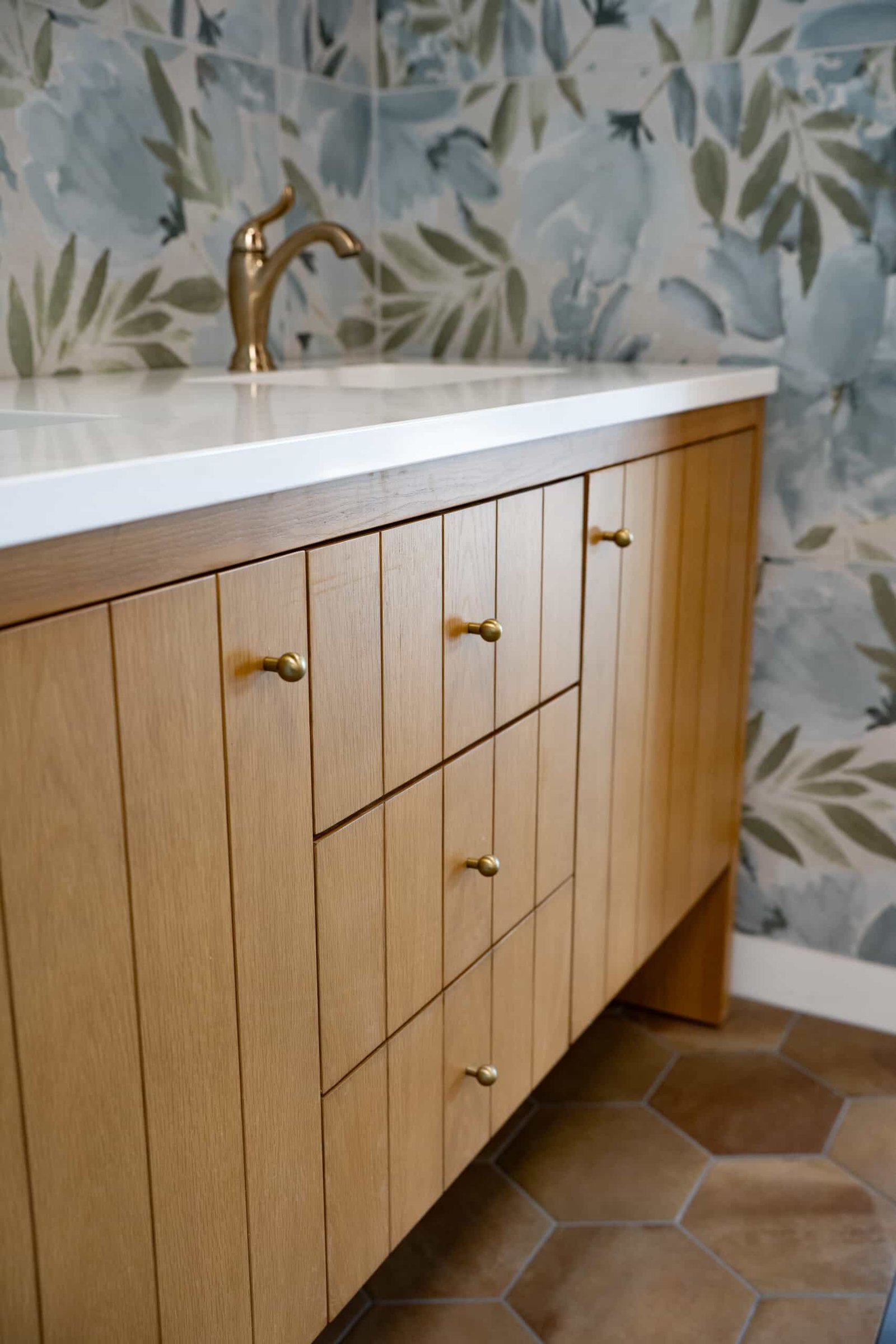
A bathroom remodel is one of the best ways to improve your home’s comfort, functionality, and value. While tile and flooring often set the foundation for the design, bathroom vanities and fixtures are the elements that bring the entire space together. The right vanity provides essential storage, while coordinated fixtures create a polished look that reflects your personal style.
With countless sizes, materials, mounting options, and finishes available, choosing bathroom fixtures can feel overwhelming. This buying guide covers the most important factors to consider, including vanity sizing, construction materials, mounting styles, and how to coordinate your selections with your bathroom finishes.
Choosing the Right Bathroom Vanity Size
The first step in selecting a vanity is determining the right size for your bathroom. A vanity that is too large can make a small bathroom feel cramped, while one that is too small may not provide enough storage or countertop space.
Common Vanity Widths
Bathroom vanities are typically available in several standard widths:
- 24–30 inches: Ideal for powder rooms, guest bathrooms, and smaller spaces where maximizing floor area is important.
- 36–48 inches: A popular size range for standard bathrooms, offering a balance of storage and countertop space.
- 60 inches: A common choice for larger bathrooms and shared spaces. This size can accommodate double sinks or provide additional storage.
- 72 inches and larger: Best for spacious primary bathrooms where maximum storage and luxury features are desired.
Single vs. Double Sink Vanities
- Single Sink Vanities: Single sink vanities work well in smaller bathrooms and provide more available countertop space for toiletries, décor, and daily essentials. Best for:
- Guest bathrooms
- Smaller primary bathrooms
- Powder rooms
- Double Sink Vanities: Double sink vanities are popular in primary bathrooms because they allow two people to use the space at the same time. Keep in mind that double sinks require more width, plumbing considerations, and countertop space. Best for:
- Larger bathrooms
- Shared spaces
- Homes where additional storage is needed
Bathroom Vanity Materials
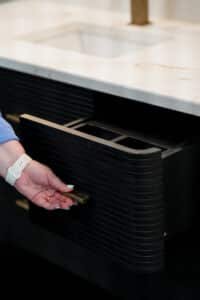
Solid Wood Vanities
Solid wood provides a natural, high-end appearance and can last for many years with proper care. Popular options include oak, maple, and walnut. Solid wood may require proper sealing and care to protect it from moisture.
Benefits include:
- Timeless appearance
- Durable construction
- Natural grain and character
Plywood Vanities
Plywood is a popular cabinet material because it offers excellent strength and moisture resistance compared to many composite materials. Many higher-quality bathroom vanities use plywood cabinet boxes with solid wood or engineered wood doors.
Benefits include:
- Strong and stable
- Resistant to warping
- Long-lasting construction
MDF and Engineered Wood Vanities
Medium-density fiberboard (MDF) and other engineered wood materials are commonly used for painted finishes because they provide a smooth surface. When choosing engineered wood, look for moisture-resistant construction designed specifically for bathroom environments.
Benefits include:
- Affordable
- Smooth painted finish
- Consistent appearance
Vanity Mounting Styles
The way a vanity is mounted affects both the appearance and functionality of your bathroom.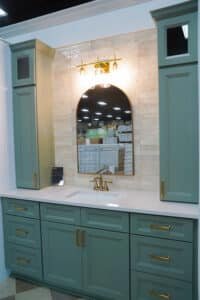
Freestanding Vanities
Freestanding vanities sit directly on the floor and are the most traditional style.
Advantages include:
- Easy installation
- Wide range of designs
- Often provides maximum storage
- Works well in traditional and transitional bathrooms
Wall-Mounted (Floating) Vanities
Floating vanities are attached directly to the wall, leaving open space underneath. Wall-mounted vanities are especially popular in contemporary bathroom designs.
Advantages include:
- Creates a modern, minimalist appearance
- Makes the bathroom feel larger
- Easier floor cleaning
- Allows customizable installation height
Corner Vanities
Corner vanities are designed to maximize space in smaller bathrooms where wall space is limited.
Best uses include:
- Powder rooms
- Compact bathrooms
- Unique layouts
Coordinating Your Vanity With Your Bathroom Finishes
A well-designed bathroom combines multiple elements, including flooring, tile, countertops, hardware, lighting, and fixtures. Choosing finishes that work together creates a cohesive and intentional look.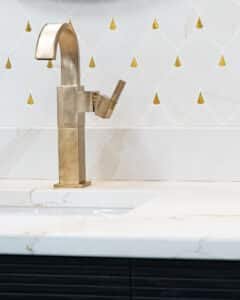
Match of Complement Your Countertop
Consider how your countertop coordinates with:
- Shower tile
- Flooring color
- Wall finishes
- Cabinet color
Coordinate Hardware Finishes
Bathroom hardware includes:
- Faucets
- Cabinet pulls
- Shower fixtures
- Towel bars
- Mirrors
Popular finishes include:
- Chrome: A classic, reflective finish that works well in many styles.
- Brushed nickel: A versatile option with a softer appearance that hides fingerprints.
- Matte black: A modern choice that creates contrast and a bold design statement.
- Brass and Bronze: Warm finishes that complement traditional, vintage, and luxury designs.
Using consistent finishes throughout the bathroom helps create a unified appearance.
Consider Your Tile and Flooring
Your vanity should complement the colors and textures already present in your bathroom.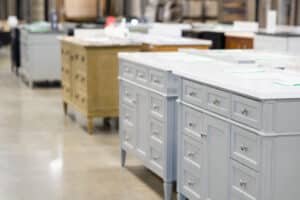
Examples include:
- Wood-look tile pairs beautifully with warm wood vanities.
- Large-format porcelain tile complements sleek floating vanities.
- Marble tile works well with elegant finishes and classic cabinetry.
- Neutral flooring allows more flexibility with cabinet colors and hardware.
Choosing the Right Bathroom Fixtures
Beyond the vanity, fixtures such as sinks, faucets, mirrors, and lighting contribute to both style and usability.
Consider:
- Sink style (undermount, vessel, or integrated)
- Faucet height and reach
- Mirror size relative to the vanity
- Lighting placement for daily tasks
- Storage accessories such as drawer organizers
These details can significantly improve the functionality of your bathroom.
Create a Bathroom That Fits Your Style
Choosing a vanity and bathroom fixtures requires balancing design, durability, and practicality. The right size ensures comfort, quality materials provide long-term performance, and coordinated finishes create a beautiful, finished space.
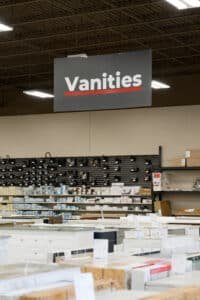 Whether you prefer a modern floating vanity, a classic freestanding cabinet, or a custom luxury design, thoughtful planning will help you create a bathroom that is both functional and visually appealing. With the right combination of vanity style, materials, fixtures, and finishes, your bathroom can become one of the most comfortable and stylish spaces in your home.
At Tile Liquidators, we’ve spent over 30 years helping North Alabama homeowners navigate these choices. Here is your guide to finding the perfect match. We invite you to skip the guesswork of online shopping. Browse our vast collection of in-stock vanities visit us at your nearest location in Albertville, Huntsville, or Gadsden. Let our experts help you find a floor that combines the quality you can see with the savings you can keep.