
The way you lay your tile is just as important as the tile you choose. While color and material set the mood, the pattern determines the energy of the room. A simple subway tile can look classic in a straight stack or sophisticated in a herringbone layout.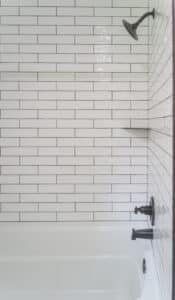
Whether you are renovating a kitchen backsplash or creating a stunning master bath floor, here is a visual guide to the most popular tile patterns and where they work best.
1. The Classics: Straight Stack and Running Bond
These patterns are timeless, easy to install, and create a clean, balanced aesthetic.
- Straight Stack (Grid): Tiles are laid in a simple, aligned grid. This creates a modern, orderly, and minimalist look. It is an excellent choice for large-format tiles in bathrooms, as it emphasizes clean lines and makes the space feel larger.
- Running Bond (Brick): Tiles are offset by 50%, mimicking the classic look of brickwork. This is the gold standard for subway tiles in kitchens. It adds a layer of movement and traditional charm while effectively hiding minor imperfections in wall alignment.
2. Dynamic Movement: Herringbone and Chevron
- Herringbone: Tiles are laid at a 45-degree angle in a “V” shape, with the end of one tile meeting the side of the other. It is sophisticated and perfect for focal points, such as fireplace surrounds or kitchen backsplashes.
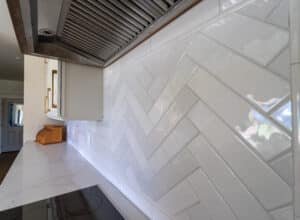
- Chevron: Often confused with herringbone, chevron tiles are cut at an angle so they meet point-to-point, creating a clean, continuous zigzag line. This pattern feels very modern and is highly effective at drawing the eye across a floor, making a narrow room feel significantly wider.
3. Geometric Interest: Hexagon and Basketweave
Geometric patterns bring character and playfulness to smaller spaces.
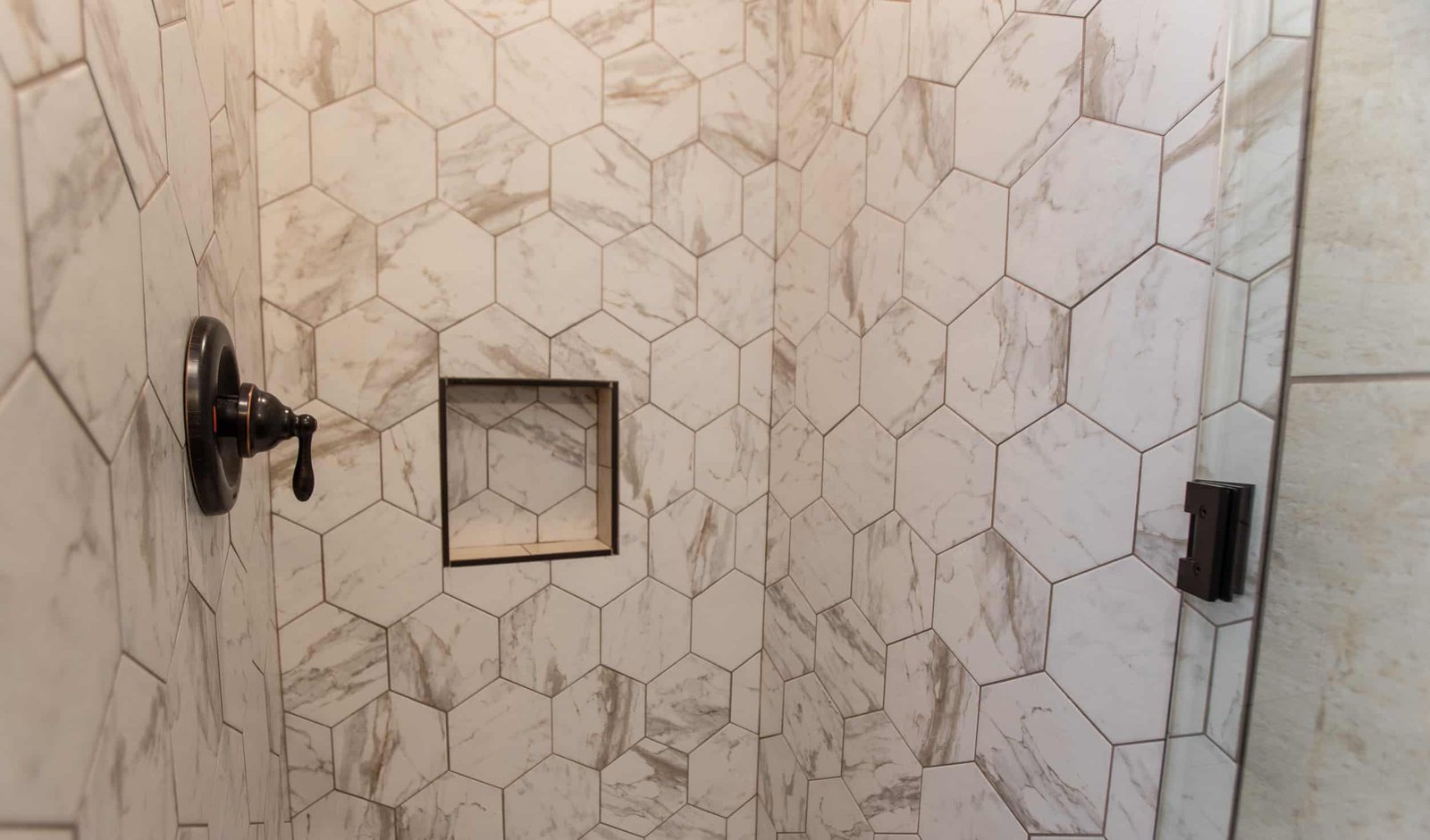
- Hexagon: Hex tiles provide a honeycomb structure that breaks up the monotony of rectangular tiles. They are a top choice for bathroom floors, where they offer a vintage-inspired aesthetic that feels both charming and contemporary.
- Basketweave: A classic pattern where small rectangular tiles are interwoven to create the appearance of a woven basket. It is a timeless choice for laundry rooms or powder rooms, offering a nostalgic, high-end feel.
Room-By-Room Recommendations
| Room | Recommended Pattern | Why? |
| Kitchen Backsplash | Herringbone or Running Bond | Adds texture and character to the hardest working wall in your home. |
| Bathroom Floor | Hexagon or Straight Stack | Provides excellent traction and a clean, spa-like atmosphere. |
| Entryway | Basketweave or Large Grid | Creates a durable, high-impact first impression for guests. |
| Master Shower | Subway (Vertical Stack) |
Vertical stacking creates the illusion of higher ceilings. |
Tips For a Successful Layout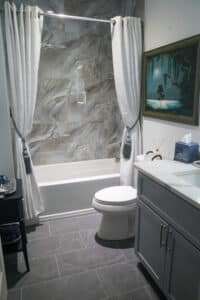
- Consider the Grout: The more complex the pattern, the more grout lines you will have. Ensure you choose a grout color that complements your tile choice—a high-contrast grout will highlight the pattern, while a matching grout will create a softer, more monolithic look.
- Mind the Scale: In very small rooms, large-format tiles in a simple straight stack can actually make the space feel bigger by reducing the number of grout lines.
- Dry Lay First: Before you apply any mortar, lay your tiles out on the floor. This allows you to check for “cut” pieces and ensure that your pattern is centered correctly in the room.
Find Your Inspiration In Person
Patterns can look very different on a computer screen than they do on your floor. Seeing the scale, the texture, and the way light hits the grout lines is essential to making a final decision.
 We invite you to visit our showrooms in Albertville, Huntsville, or Gadsden. Our design experts can help you lay out different patterns, compare tile sizes, and even show you how specific layouts can transform the feel of your floor plan.