
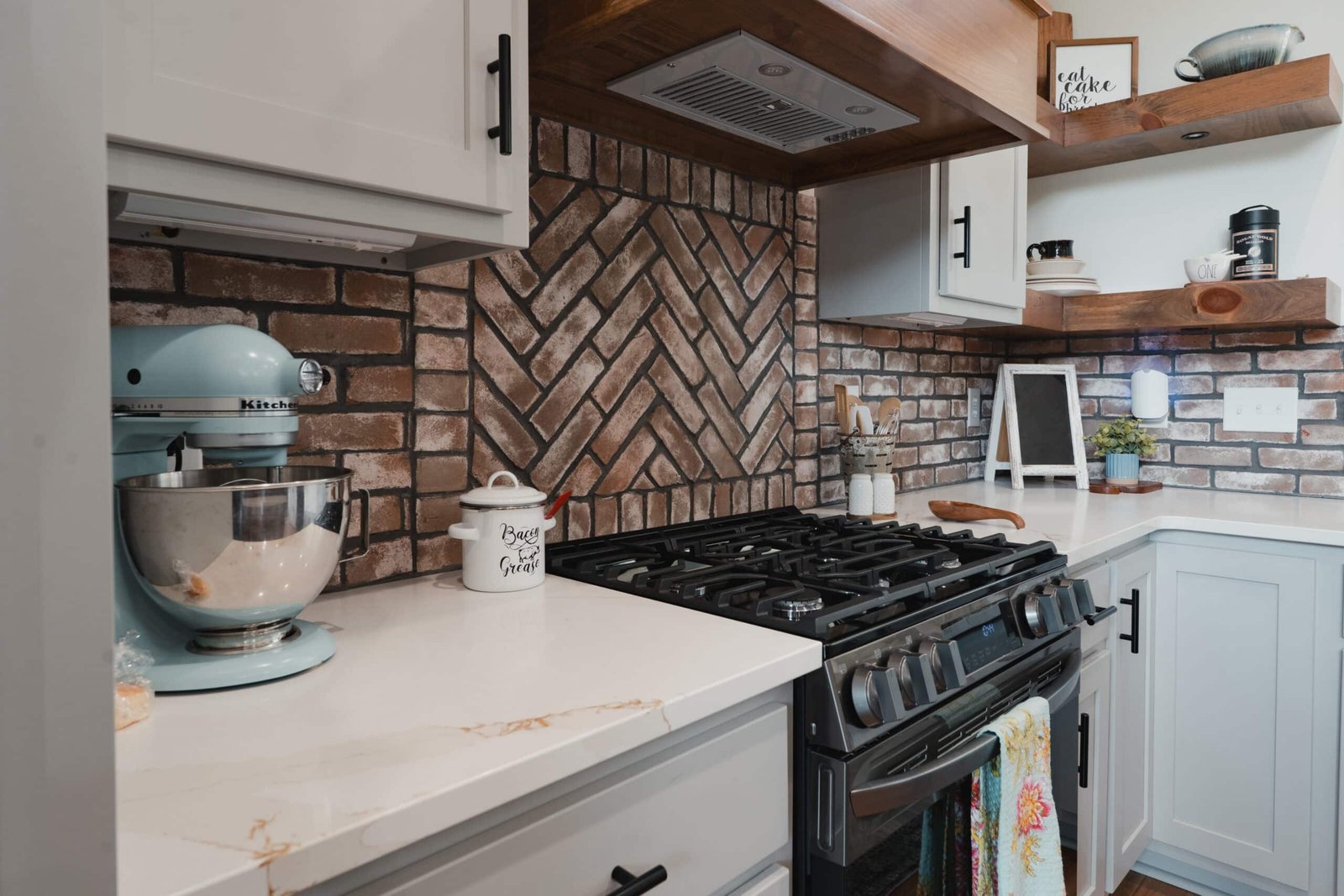
Designing a kitchen or bathroom is often described as a puzzle. You have several major elements—cabinets, countertops, and flooring—that must work in perfect harmony. When one element feels slightly “off,” the entire room can lose its cohesion. However, when they are coordinated effectively, the result is a professional, high-end space that feels intentional and inviting.
At Tile Liquidators, we see hundreds of design combinations every week. Whether you are aiming for a modern minimalist look or a warm, traditional feel, here is our guide to balancing these key surfaces.
1. The Rule of Balance: Light, Dark, and Contrast
The most common mistake homeowners make is choosing all elements in the same tone, which can result in a flat, one-dimensional look. A successful design usually relies on a balanced distribution of color.
- If you have dark cabinets: Consider choosing a lighter flooring—such as a light-toned oak or natural stone-look porcelain—to prevent the room from feeling “bottom-heavy” and closed in.
- If you have light/white cabinets: You have more flexibility. You can ground the space with a rich, dark hardwood or a striking patterned tile, or maintain a clean, airy aesthetic with lighter, soft-toned flooring.
- Countertop Connection: Your countertop should act as the “bridge” between your cabinets and floors. If your cabinets and floors are similar in tone, use the countertop to introduce a contrasting color or texture to break up the space.
2. Harmonizing Textures and Undertones
- Warm vs. Cool: If your cabinets have cool, gray undertones, look for flooring with cool grays or neutral beiges. If your cabinets have warm, yellow, or red undertones, flooring with warm honey or chestnut tones will feel much more natural.
- Texture Contrast: If you have smooth, high-gloss cabinets, try a floor with a bit of texture—like a wire-brushed luxury vinyl or a natural stone tile. The contrast in texture adds depth that a perfectly smooth, uniform room lacks.
3. Considering the Material Flow
Your choice of material should also respect the “work zone” of your kitchen.
- Durability and Cohesion: Since the kitchen is a high-traffic area, don’t sacrifice function for style. High-performance Luxury Vinyl Plank (LVP) can mimic the exact wood grain needed to match your cabinetry while providing the waterproof durability required for a kitchen.
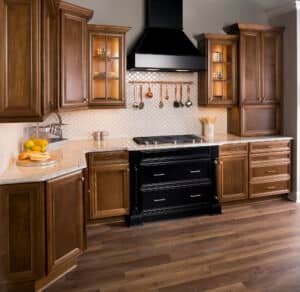
- Tile Transitions: If you are using tile for your backsplash or floors, consider how the grout color affects the room. A grout that matches the tile creates a seamless, modern look, while a high-contrast grout can turn your floor pattern into a focal point that ties in with the hardware on your cabinets.
Your Design Team at Tile Liquidators
We know that selecting a cabinet finish, a slab of granite, and a box of flooring separately can lead to unexpected results. That is why we encourage our customers to take advantage of our showroom experience.
When you visit us in Albertville, Huntsville, or Gadsden, bring along a cabinet door sample, a paint swatch, or even a photo of your countertop choice. Our team can pull samples from our vast inventory, laying them side-by-side on our showroom floor so you can see exactly how the colors interact under different lighting conditions.
We can help you navigate our full range of:
- Luxury Vinyl Plank (LVP): For the warmth of wood with extreme moisture resistance.
- Porcelain and Ceramic Tile: For timeless durability and endless pattern options.
- Natural Stone: To add authentic, one-of-a-kind texture and elegance.

Don’t guess when it comes to your home’s design. Let us help you coordinate your flooring with your cabinetry to create a space that feels perfectly unified.